Books By Month:
This year I plan to pick a favorite book for every month, hopefully keeping track of those I loved over time with better accuracy.
A guide to some key symbols in the list here:
- † : Indicates that the book was re-read.
- ★: Indicates that the book is in the running for this years top 10.
JAN:
All January Reads:
- All the Light We Cannot See – Anthony Doerr
- Abundance – Ezra Klein & Derek Thompson
- The Vanishing Half – Britt Bennett
- King Sorrow – Joe Hill
- The Unbearable Lightness of Being – Milan Kundera
- Lights On: How Understanding Consciousness Helps Us Understand The Universe – Annaka Harris ★
- Demon Copperhead – Barbara Kingsolver
- The Color of Magic – Terry Pratchett
- Decoding Jung’s Metaphysics: The Archetypal Semantics of an Experiential Universe – Bernardo Kastrup
- I know this much is true – Wally Lamb ★
- Dungeon Crawler Carl – Matt Dinniman
- Imajica – Clive Barker
Best Book of January:
I Know This Much is True – Wally Lamb
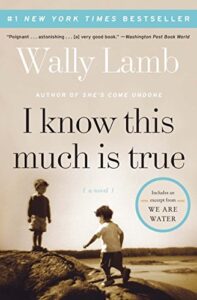
I know this much is true, by Wally Lamb is a gripping emotional tale about what it is like to be “the spared one”. The tale is a beautiful blend of guilt, shame, anger, mystery, and misery. What does it mean to be the one who ‘lives’? Am I not my brother’s keeper?
Despite its heft, I guarantee that once you start this tome begins to feel as light as a beach read, and becomes unputdownable. 10/10 definitely recommend, especially for those who have ever had or been a sick/troubled relative.
FEB:
All February Reads:
- The Power – Naomi Alderman
- Babel No More: The Search for the World’s Most Extraordinary Language Learners – Michael Erard
- Katabasis – R.F. Kuang
- Zen and the Art of Motorcycle Maintenance: An inquiry into values – Robert M. Pirsig
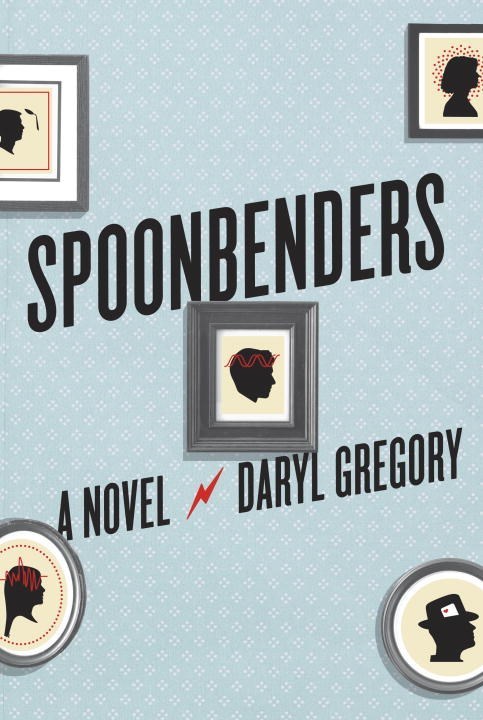
- Spoonbenders – Daryl Gregory ★
- Island 731 – Jeremy Robinson
- The Republic of Pirates: Being the True and Surprising Story of the Caribbean Pirates and the Man Who Brought Them Down -Colin Woodard
- Independent People – Halldór Laxness
- The Lies of Locke Lamora – Scott Lynch
- Severance – Ling Ma
- The Dream Hotel – Laila Lalami
Best Book of February:
The Dream Hotel – Laila Lalami
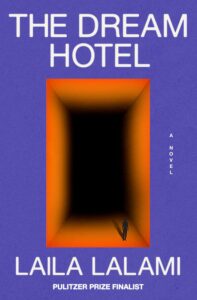
It was a close call this month; by far the most enjoyable book I read was Spoobenders by Daryl Gregory, but I would be remiss if I didn’t hand the top book of the month to The Dream Hotel by Laila Lalami.
A lover of the horror genre and an avid reader, I only now and then stumble across a book that genuinely unnerves me. Laila Lalami’s dystopian cyber surveillance novel hit home for me. Halfway through the novel, I found myself researching “dumb-phones” and articles on how to minimize tracking metrics and other data. The book falls into the special genre of books that rattled the anxieties and fears within me, in the league of Blood Meridian, The Parable of the Sower, and Little Heaven; those truly good horror stories, graphic historical accounts, or, in Lalami’s case, a sci-dystopia that feels all too plausible, that made my spine tingle.
Interlude 1:
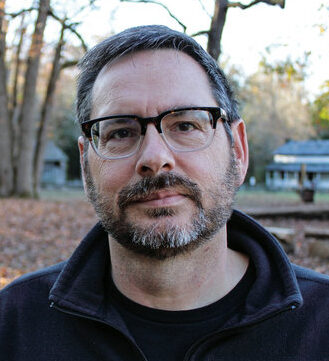
Daryl Gregory:
The Unsung Author
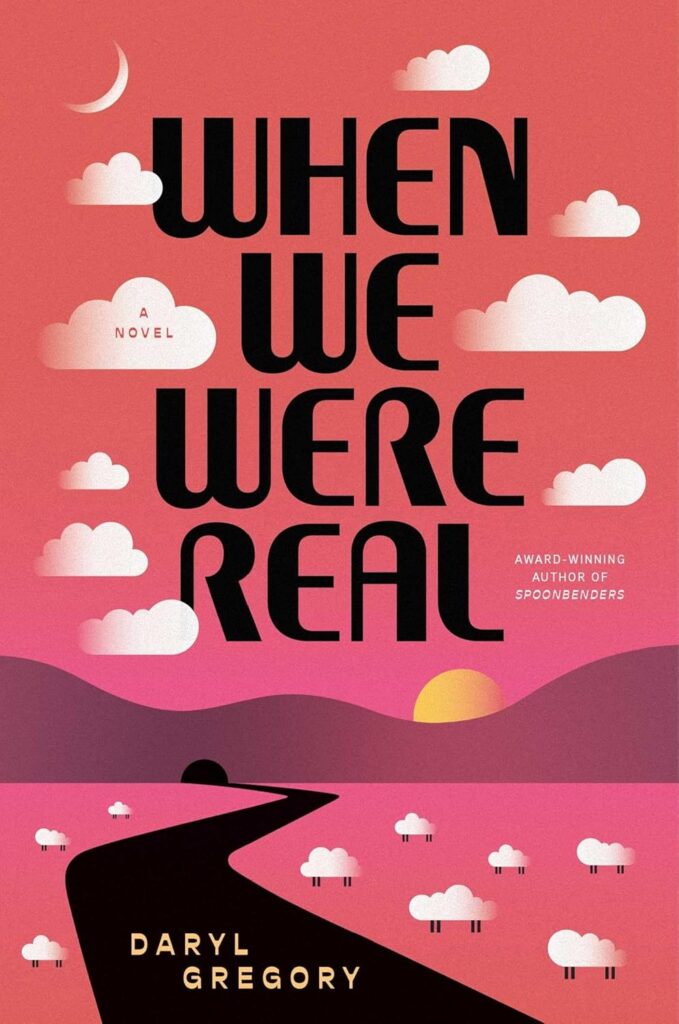
I wanted to take a moment to mention a writer I discovered this year. Though in the past two months he was beaten out for my pick of best book, he was a close second for both March and February.
Both of his novels, Spoonbenders and When We Were Real, show his talent at weaving gripping yet amiable fantasy/sci-fi novels. Spoonbenders reminded me of what I felt like to grow up in a big extended family, a house full of quirky relatives each with their own petty disputes, then adding on-top of all of this the family’s “psychic” history and the loving though departed grandmother, it was one of those few books that is gripping in suspense but at the same time warm and welcoming.
In When We Were Real, he crafted an even bolder world with higher-stakes suspense, but at the end of this complex web of plot and narrative, you feel a little warmer having come to know each character better. I think it is also worth noting that Daryl Gregory does a wonderful job of creating a diverse cast of characters from different ethnic, gender, and sexual orientation backgrounds, and he lets them ‘be’ in the plot just as they are. He is very skilled at not creating ‘Diverse-Characters‘, but creating ‘Diverse-Characters‘. It is a low bar, but one I feel like white people struggle to meet coming from any direction.
All of the above, and the true beauty of his books I think is a direct result of him being a masterful character creator. Like Becky Chambers, Daryl Gregory seems to have an intuitive understanding of human nature and uses this skill to craft elaborate plots with masterfully developed characters.
MAR:
All March Reads:
- Gravitys Rainbow – Thomas Pynchon
- The Strain – Guillermo Del Toro & Chuck Hogan
- In Love with the World: A Monk’s Journey Through the Bardos of Living and Dying – Yongey Mingyur Rinpoche
- When We Were Real – Daryl Gregory
- The World According to Garp – John Irving
- The Order of Time – Carlo Rovelli
- Ubik – Phillip K. Dick
- The Life of Milarepa – Tsangnyön Heruka
- Ulysses – James Joyce †
- The Magus – John Fowles ★
- Stone Yard Devotional – Charlotte Wood
- The Light Eaters: How the Unseen World of Plant Intelligence Offers a New Understanding of Life on Earth – Zoë Schlanger
- Solenoid – Mircea Cărtărescu
- A Scanner Darkly – Philip K Dick ★
- The Hidden Girl – Ken Liu
Best Book of March:
The Magus – John Fowles
John Fowles’ The Magus starts out like any other pseudo-fantastical travel abroad thriller, but once you think you understand what the book is going to be about, you feel your fingers have grasped the edges of the plot; Fowles drops the first bomb on your understanding. His revelations, and lack thereof throughout the rest of the book, proceed like an aerial bombardment. Leaving you like the main character, wondering right up until the end, what is real? Which lies to believe?
A testament to any book I am reading is how it shows up in my dreams, and The Magus was floating around in my subconscious for a long time after I finished the book. Though the ending seemed a tad underwhelming at first, it grew on me, the outlandishness, the craziness, of the whole saga, the Great Game, moved me to my core.
In most books, you have a perceptual advantage over the protagonist, either from a third-person narration or a familiarity with common story arcs. The Magus steals that from you. You find yourself just like the protagonist, lost in what at times seems like a cruel psychological game. You feel like Piranesi from Susanna Clarke’s novel, except the labyrinthine maze that traps you is not made of walls but of lies.
APR:
All April Reads:
- To The Bright Edge of the World – Eowyn Ivey
- The Art of Transforming the Mind – B. Alan Wallace
- Dead Souls – Nikolai Gogol
- Pillars of Earth – Ken Follett ★
- The Hobbit – J.R.R Tolkien
- The Fellowship of the Ring – J.R.R Tolkien †
- The Two Towers – J.R.R Tolkien †
- The Return of the King – J.R.R Tolkien †
- The Bonfire of the Vanities – Tom Wolfe
- Water Moon – Samantha Sotto Yambao
- The Contortionist’s Handbook – Craig Clevenger ★
- The Better Angels of Our Nature: Why Violence Has Declined – Steven Pinker ★
- Agency – William Gibson
Best Book of April:
Pillars of Earth – Ken Follett
Ken Follett’s Pillars of Earth was one of those books that I had heard about and been recommended to read for years. It was also one of those books where, upon reading a summary of the plot, I thought, How good can this be? 800-something pages about a cathedral?.
I am ashamed I wasted years not reading this masterpiece. The tale of a small interwoven cast of characters and the nuances of their lives during the early Middle Ages in England. The novel charts the harrowing ups and downs of life for common folk during that time period with astounding historical accuracy, all the while, parallel to that storyline is the plans for the construction of a great cathedral. A building worthy of God.
What turned me away from this book for so many years is exactly what made it such a beautiful read. Pillars of Earth contains no epic battles, no magic, no dragons; this is no Game of Thrones. Just the rawness of life and struggle during that time period. With all the fantasy and whitewashing of the time period stripped away, Pillars of Earth provides a beautiful look into the nature of being Human, of being a Good Person, of truly being a servant of God, both then and now.
Interlude 2:
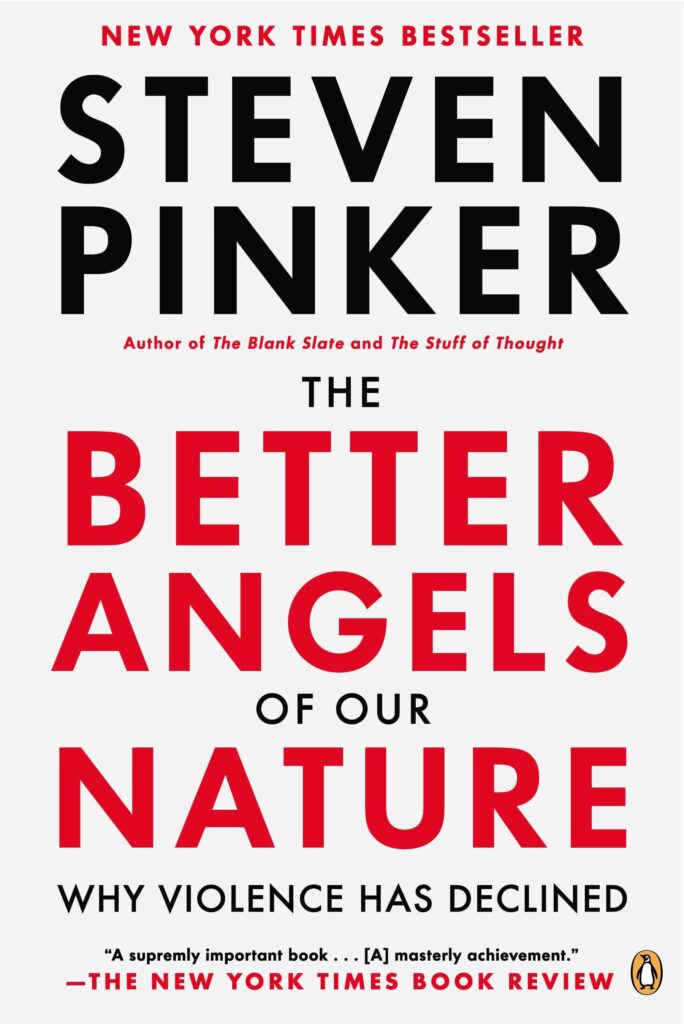
The Better Angels of Our Nature: Why Violence Has Declined
– Steven Pinker:
The Needed Read:
There is a lot happening in the world right now. Madness and Chaos seem to rule; the news often seems to run every day with the strategy of ‘If it bleeds, it leads.’ Most of us know that the maliciousness of the world is discussed far more often than its righteousness. But if I asked you, is the world safer now than it was in 1990? Would you say yes? What if I asked you if the world in 1970 was safer than the world in 1920? What if I asked you if the peak of violence in the 1940s, amidst the holocaust and atomic bombs, was safer than 1850, 1450, 400, 400 BC, 10,000 BC? Would you agree?
Steven Pinker’s magnum opus is a much-needed read in our time of societal and economic change. Though I do not necessarily trust all the viewpoints in his work here, the data on nomadic societies from 12,ooo + years ago is too scant for me to believe they were either more or less violent than us today, and modern-day hunter-gatherers do not make a valid analog for many reasons. Also, the datasets used are heavily Eurocentric, but I imagine this largely reflects the data Pinker and his colleagues had access to. Minor disagreements aside I think Stephen Pinker’s Better Angels of Our Nature is true at it’s essence and is a necessary read for every 21st century citizen who watches the news or consumes media. With the optimal goal of news media being engagement, stoking fear and outrage is part of the business model. Also the world is not free of violence at all, what is happening right now in Iran, Palestine, Lebanon, and South Sudan is unacceptable an atrocious by all measures.
And yet, most of us do not contemplate how far we have come on a daily basis. This book would be at the top of my list for antidotes to modern angst. We should look back, we should do the math, as Pinker does, and we should be proud of how far we have come and watchful that we don’t undo our progress via overreactions. There is so much to commend in this book, from the data, tables, and charts, enough to convince even the most skeptical reader. To the horrifying historical anecdotes and the attitude of watchful hope for the future. This book is a testament to Rational Optimism about the human race and an exploration of the idea that Moral Truths exist, as do scientific ones, and that as we progress from taming fire to exploring space, we are discovering not just the scientific laws of reality but the moral ones as well.
MAY:
All May Reads:
- Between Two Fires – Christopher Buehlman
- Anna Karenina – Leo Tolstoy
- A Short Stay in Hell – Steven L. Peck
- Death of the Author – Nnedi Okorafor
- A Visit From the Goon Squad – Jennifer Egan
- Geek Love – Katherine Dunn
- Diaspora – Greg Egan
- Saint of The Narrows Street – William Boyle
- Nothing to see here – Kevin Wilson
- Homo Deus: A Brief History of Tomorrow – Yuval Noah Harari
- Bury Our Bones in the Midnight Soil – V.E. Schwab
- Palimpsest – Catherynne Valente
Best Book of May:
Death of the Author – Nnedi Okorafor
Many books I read this past month took unique approaches to common literary themes. From Katherine Dunn’s Geek Love, an exploration of beauty and ugliness within a family where deformity is a virtue and normality a sin, to Kevin Wilson’s Nothing to See Here, about the struggles of raising children and the discussion of inequality and unfairness in society, told through the metaphor of children who, when they get upset, literally catch on fire.
All that said, by far the most intellectually curious, while also a moving tale for me this month, was Nnedi Okorafor’s Death of the Author. The main character’s family, their struggles with her disability, the complex dynamics of a large Nigerian-American family, and the familial conundrum of what to do when the black sheep becomes the family’s biggest success all make this book a worthwhile read. What really impressed me about Death of the Author, however, was how, at the same time you read the story of a disabled woman writing a bestselling novel, you are also reading about a dystopian future with truly science-fiction elements, and slowly it dawns on you that you are not sure which story is writing the other.
Nnedi Okorafor pulls off this surrealist move with grace; it is a hard tale to spin. Books that become self-reflective are often some of the hardest novels to read and write. Unlike Italo Calvino or James Joyce, whose brilliance is often masked by an air of erudition, or a novel like Sophie’s World, which is mired in the philosophy necessary to explain what is going on, Nnedi Okorafor’s masterpiece needs none of that. It is easy and enjoyable to read, so much so that you become too confident you know what is going on, and then at the end, you feel you need to read the whole book over again from a different perspective.
JUN:
All June Reads:
- The Turner House – Angela Flournoy
- Welcome to Night Vale – Jeffrey Cranor and Joseph Fink
- When we cease to understand the World – Benjamín Labatut
- The Amazing Adventures of Kavalier & Clay – Michael Chabon
- Exploring The World of Lucid Dreaming – Stephen LaBerge & Howard Rheingold
- A Gentleman in Moscow – Amor Towles
- Jonathan Strange & Mr. Norrell – Susana Clarke
- Stoner – John Williams
- We Computers – Hamid Ismailov
- A Fine Balance – Rohinton Mistry ★
- The Tibetan yogas of dream and sleep – Tenzin Wangyal Rinpoche
- White Noise – Don DeLillo
- Horror movie – Paul Tremblay
- There are Rivers in the Sky – Elif Shafak
Best Book of June:
A Fine Balance – Rohinton Mistry
First and foremost, I want to list out some honorable mentions for this month. The goddess Nisaba has blessed me with a highly rewarding month of stories (see There Are Rivers in the Sky by Elif Shafak). Before diving into my top pick for this month, I want to mention that The Turner House by Angela Flournoy, When We Cease to Understand the World by Benjamín Labatut, A Gentleman in Moscow by Amor Towles, Stoner by John Williams, and White Noise by Don DeLillo, all would have one best pick if they were placed in the previous month.
Despite the wealth of fabulous stories I read this month, when I faced the task of picking the best, there was no contest. A Fine Balance by Rohinton Mistry may be one of the best books I have ever read. This book contains so much that, to even leave a review, I had to reread the synopsis to figure out how to say what it’s about.
I was disappointed with the synopsis.
Rohinton Mistry drags you into a cast of characters in India during a period of political upheaval and overwhelms you with the sorrow, joy, and suffering of human life in the hardest of times. Tragic and yet endearing, the book is an emotional hurricane in the best and worst of ways. In all honesty, I don’t think text can convey what A Fine Balance is about except the book itself. It is one of those rare reads where not only the words fall away, but the internal movie falls into the background as well, and you find yourself caught up in a storm or raw human-ness that at the end leaves you feeling you have just experienced something tragic, vast, and profound that can never be put into words. And somehow Rohinton Mistry does it, throwing you into an immense, indescribable space where you feel the raw human-ness of this life.
JUL:
All July Reads:
- Riverworld: To Your Scattered Bodies Go -Philip José Farmer
- Riverworld: The Fabulous Riverboat – Philip José Farmer
- Requiem for a Dream – Hubert Selby Jr
- The Invention of Yesterday: A 50,000-Year History of Human Culture, Conflict, and Connection – Tamim Ansary
- Dying Inside – Robert Silverberg
- If on a Winter’s Night a Traveler – Italo Calvino
- The Laurus – Eugene Vodolazkin
- Against the Machine: On the Unmaking of Humanity – Paul Kingsnorth
- Weaveworld – Clive Barker
- The Stranger – Albert Camus †
- The Secret History – Donna Tartt
- The Dispossessed – Ursula Le Guin
- The Passenger – Cormac McCarthy
- Stella Maris – Cormac McCarthy
- Roadside Picnic – Arkady and Boris Strugatsky
- A Thousand Splendid Suns – Khaled Hosseini
- The Hero with a Thousand Faces – Joseph Campbell
Best Book of July:
If on a Winter’s Night a Traveler – Italo Calvino
It should be known that this month’s pick was a toss-up between Calvino’s novel and The Dispossessed by Ursula K Le Guin. The latter was an amazing thought-experiment-like novel about an anarchic-communal political system, full of fascinating ideas about the definition and structure of both society and government. The former, however, was an amazing thought experiment novel about a thought experiment novel. Although The Dispossessed was an amazing book, and arguably more entertaining at points than If on a Winter’s Night a Traveler, I have to hand the winner to Italo Calvino.
The beauty of Calvino’s prose and philosophical writing style, in books like If on a Winter’s Night a Traveler and Invisible Cities, can be stated as such: Ursula K Le Guin, and others, i.e., Hermann Hesse, Neal Stephenson, Margaret Atwood, write about fascinating ideas; Italo Calvino writes around them. The beauty of Calvino’s prose is in its inherent poetic-ness, its bizarre, Kafkaesque-haiku style, where you finish the story thinking about an idea that was never even mentioned in the text. In the style of a Zen Koan, Calvino writes entertaining outlandish stories that, when finished and contemplated, you realize were no more than mere phonetic ornamentation to some grand unexpressed idea. The story is hidden in between the lines, and although that may make Calvino a harder read for some, he is one of the few authors whose work and ideas pop up in my head years after reading them.
AUG:
All August Reads:
- The Ardent Swarm – Yamen Manai
- Infinite Detail – Tim Maughan
- Last Exit to Brooklyn – Hubert Selby Jr
- The Conference of the Birds – Farid Ud Din Attar
- Sum: Forty Tales from the Afterlives – David Eagleman †
- On the Road – Jack Kerouac †
- The Electric Kool-Aid Acid Test – Tom Wolfe †
- Shadowland – Peter Straub
- My Name is Red – Orhan Pamuk
- The Art of Language Invention – David J Peterson
- The Revelator – Daryl Gregory
- The Colony – Annika Norlin
- Illusions: The Adventures of a Reluctant Messiah – Richard Bach
- The Last House on Needless Street – Catriona Ward ★
Best Book of August:
The Last House on Needless Street – Catriona Ward
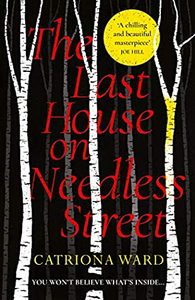
The Last House on Needless Street by Catriona Ward was a mind bender. Utterly disturbing at points and hopelessly depressing at others, it is a horror novel with the unending plot switches reminiscent of John Fowles The Magus.
Few books have disturbed me more than this one. This book provides a level of narrative discomfort on par with books like The Road, Blood Meridian, and Little Heaven. Unlike all those books, every 10 chapters or so in Catriona Ward’s mind-bender left me a little more unsure I knew exactly who the villain was and what exactly had happened. The repeated rollercoaster ride of “who did what and to whom” cycled chapter after chapter, repeatedly built up my confidence at spotting the villain only to knock it down again on the next page.
I would not recommend this book for the squeamish of faint of heart, but I must say for those who enjoy a page turning thriller, have a strong stomach, and the endurance to save your judgement till the final page; this is the book for you.