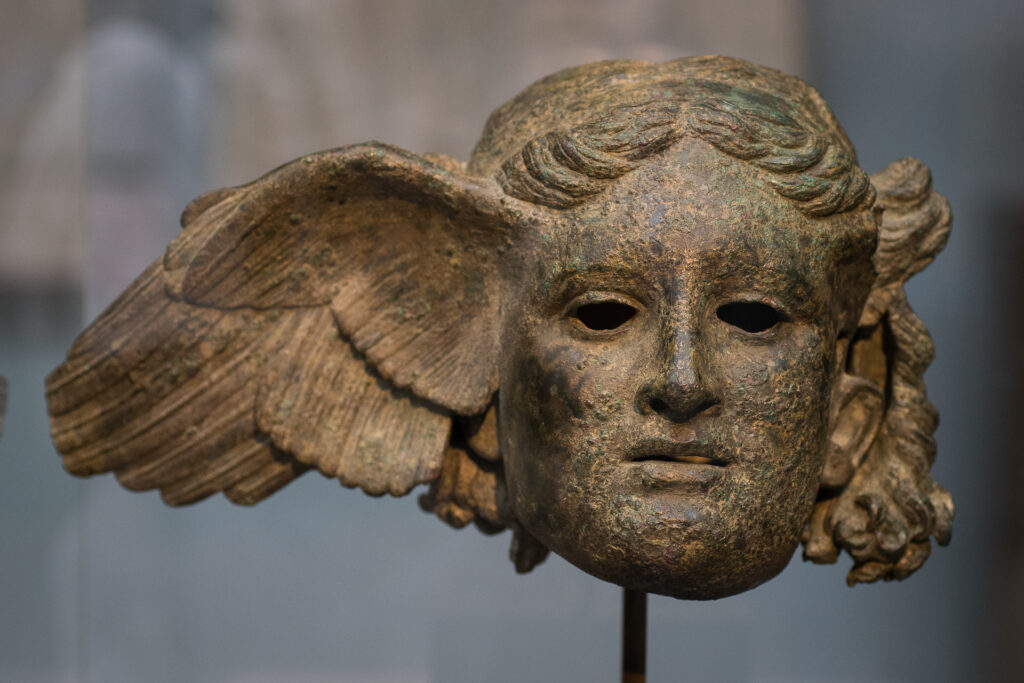

Hypnos, the brother of Death
We all dream; these nocturnal emissions of the subconscious, whether we remember them or not, are a universal aspect of human nature. I will admit to having never put too much stock into dreams. I remembered them from time to time, yet never bought into any of the Freudian dream interpretation schtick, and as a result, with the exception of the rare ‘numinous’ dream, never thought too much about them.
In the past several years, I began to meditate more and more on the nature of reality. I think it is part of getting older, and partly my inner curiosity about the workings of the world, that I have been drawn more and more into the ideas of cosmogony and philosophy. I consider myself a rational person and someone who values scientific thinking and the Western scientific model greatly. Despite that, I have had several numinous experiences in my life, the kind that become hard to properly fit into a model of scientific materialism.
In my perpetual quest for understanding more about myself and the nature of reality, I have been drawn more and more over the last few years towards the Allegory of the Cave, the ideas of Analytical Idealism, and Neoplatonic thought. These sources have been a wellspring of new ways for me to craft ideas about reality that are capable of fitting some of the numinous experiences and the wonderful discoveries and theories of science at the same time.
Recently I began to take another peak into the ideas of Tibetan buddhism and through those ideas and practices began to seek out the brother of Death, to commune and start to examine a part of myself that I have left unexamined for too long.
В свою мире
I have always had an active imagination, even as a child, my ability to visualize and immerse myself in another reality was so effective that I could enjoyably pass time in a dark room alone for hours. I would be remiss if I did not admit to still doing it on occasion. It is a beautiful thing, and for a long time I thought it akin to some bizarre disorder of the mind. I remember being very adverse to discussing it once I discovered that it was not something everyone did or necessarily could do.
An explanation of my attraction to philosophy and the esoteric cosmogonies of both modern physics and world religions would be incomplete without understanding how this ‘hobby’ worked and continues to work for me. Lie or sit down with your spine straight calm the mind, a simple trick for this is to count 21 breaths mindfully, then feel yourself sink into your chair/bed/couch/whatever then walk to the beach.
That last part is the oddity for me, when I do the above and the walk to the beach, I do not experience the idea of ‘walking to a beach’, I do not even simply see myself ‘walking to the beach’ – I am immersed. All of a sudden, I can feel the sand underneath my toes, there is a light breeze at my back, the glint from the surface of the waves reflecting the sun hurts my eyes, the smell of salt pervades my senses, and with enough practice, the difference between mentally walking on the beach and walking on the beach for me, becomes vanishingly small.
That is a problem, when it becomes more and more difficult to discern what the difference is between the mental beach and real beach, when even the mental beach seems to produce unexpected bird calls and plants that I am not necessarily familiar with. It makes me wonder about the nature of a mind that can produce this beach and beaches in general.
Before you call me insane, yes, there is a clear difference between the mental beach and the physical one, but my point is that with more and more practice of this ‘hobby’ of mine, the difference is disturbingly small.
But proven by my awkward attempts at explaining why I didn’t enjoy video games in high school, I already had a top-notch virtual reality machine; not everyone has this experience. Not everyone’s mental beach is so vivid that they could spend hours there.
That said, we all dream…
The Bardo of Becoming & Tibetan Dream Yoga
I will not try to explain the elaborate cosmogony, beliefs, and practices of Tibetan Buddhism, as an American Catholic, it is beyond my ability to describe adequately, though, as with the other topics in this post, I will link to reading material at the end for those who may wish to learn more.
What is important to mention here is the view prominent in Buddhism that mental-reality, a reality of individual things, is an illusion, and that Tibetan Buddhism encourages, in addition to a myriad of mind training practices during the day, cultivating a discerning awareness of our reality when we are asleep as well.
When we dream, all of us are on our own mental beaches, although in a dream, the beach and the real beach are completely indistinguishable. This is widely known and acknowledged, but very few people, and even very religious traditions, seem to openly examine what exactly this means for us, and for our waking existence.
When I dream of a beach or an airport, it IS a beach or an airport, often filled with some people I know and others I don’t. If they hit me, I feel pain; if a tsunami comes, we run in real fear. When I dream as Liam, I am the real Liam. It doesn’t matter if in this dream Liam has the feet of a goat or blue skin; Liam is unperturbed and sees such bizarre occurrences as regular aspects of himself, like having hazel eyes or brown hair.
Avoiding digression into the complex mechanics of dream yoga, and things I am not capable of or understand, the purpose of examining our dreams here is to better understand the illusion of self. We all have dreams where the scenes and our roles in them change very rapidly, and we are unalarmed or disturbed by that. In dreams, reality and ourselves are much more fluid and malleable and therefore easier to see as illusions.
If you are like me and don’t often recall your dreams, a simple step of recording them in writing in the morning is often quite helpful in remembering them in greater and greater detail every night. I encourage this examination as it helps get a better understanding of subconscious selves and the fundamental bizarreness that is dreaming.
Nagasena’s Chariot and Theseus’s Ship:
I encourage anyone who has followed my rambling this far to read the passages below before continuing.
King Milinda’s Questions and the Chariot Simile, by Barbara O’Brien.
One of the King’s first questions is on the nature of the self and personal identity. Nagasena greeted the King by acknowledging that Nagasena was his name, but that “Nagasena” was only a designation; no permanent individual “Nagasena” could be found.
This amused the King. Who is it that wears robes and takes food? he asked. If there is no Nagasena, who earns merit or demerit? Who causes karma? If what you say is true, a man could kill you and there would be no murder. “Nagasena” would be nothing but a sound.
Nagasena asked the King how he had come to his hermitage, on foot or by horseback? I came in a chariot, the King said.
But what is a chariot? Nagasena asked. Is it the wheels, or the axles, or the reigns, or the frame, or the seat, or the draught pole? Is it a combination of those elements? Or is it found outside those elements?
The King answered no to each question. Then there is no chariot! Nagasena said.
Now the King acknowledged the designation “chariot” depended on these constituent parts, but that “chariot” itself is a concept, or a mere name.
Just so, Nagasena said, “Nagasena” is a designation for something conceptual. It is a mere name. When the constituent parts are present we call it a chariot; When the five skandhas are present, we call it a being.
From Life of Theseus by Plutarch
The ship wherein Theseus and the youth of Athens returned from Crete had thirty oars, and was preserved by the Athenians down even to the time of Demetrius Phalereus, for they took away the old planks as they decayed, putting in new and strong timber in their places, insomuch that this ship became a standing example among the philosophers, for the logical question of things that grow; one side holding that the ship remained the same, and the other contending that it was not the same.
The above passages are traditional allegories from two different cultures separated by thousands of miles and hundreds of years, but they both reflect the same problem: how many planks can we remove before it is no longer Theseus’s ship? If I add an ornate wooden mermaid to the front of the ship, is it still the Ship of Theseus? And if so, as Nagasena inquires about the chariot, what makes ‘it’ the Ship of Theseus? And as Nagasena conculdes the Ship of Theseus is just a mere name, a concept, a social designation to refer to something easily.
This is all well and good to understand intellectually, but it is hard to feel when we are not deep in contemplation, meditation, or under the influence of psychedelics. Many of us do not dedicate the time required in waking meditation for these ideas to start to pervade our daily consciousness. This is where I feel analysis of our dreams can be useful, by remembering our dreams better and better, by writing them down every morning and looking at the way scenery and self change so easily the parable of Nagasena and the paradox of Theseus become much more intuitive both when dreaming and waking.
Cool, but why should I care?
How often in all of our lives do we feel upset, suddenly bothered by some external phenomenon? If you’re like me, these little hiccups in our daily well-being happen all the time. Sometimes big and sometimes small, they have a real effect on our emotions, sometimes causing petty frustrations and or anxiety, sometimes creating real sadness and suffering.
When we start to see the paradox of Theseus and Nagasena in our waking mind, when events that frustrate and bother us pop up more and more, we have to ask ourselves, ‘Who is getting upset?’ I have found that that question quickly takes the wind out of the sails of my worry and frustration. Such an experience is an invitation to think about who I am right now. More and more, it is an invitation to think, who can I be right now?
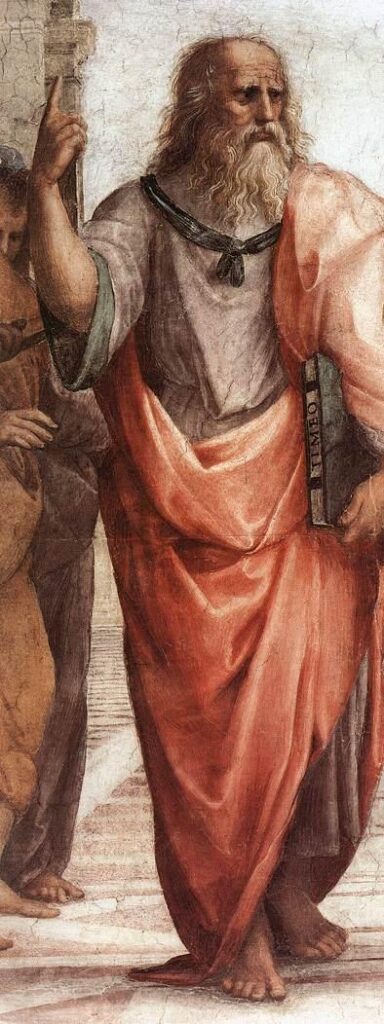
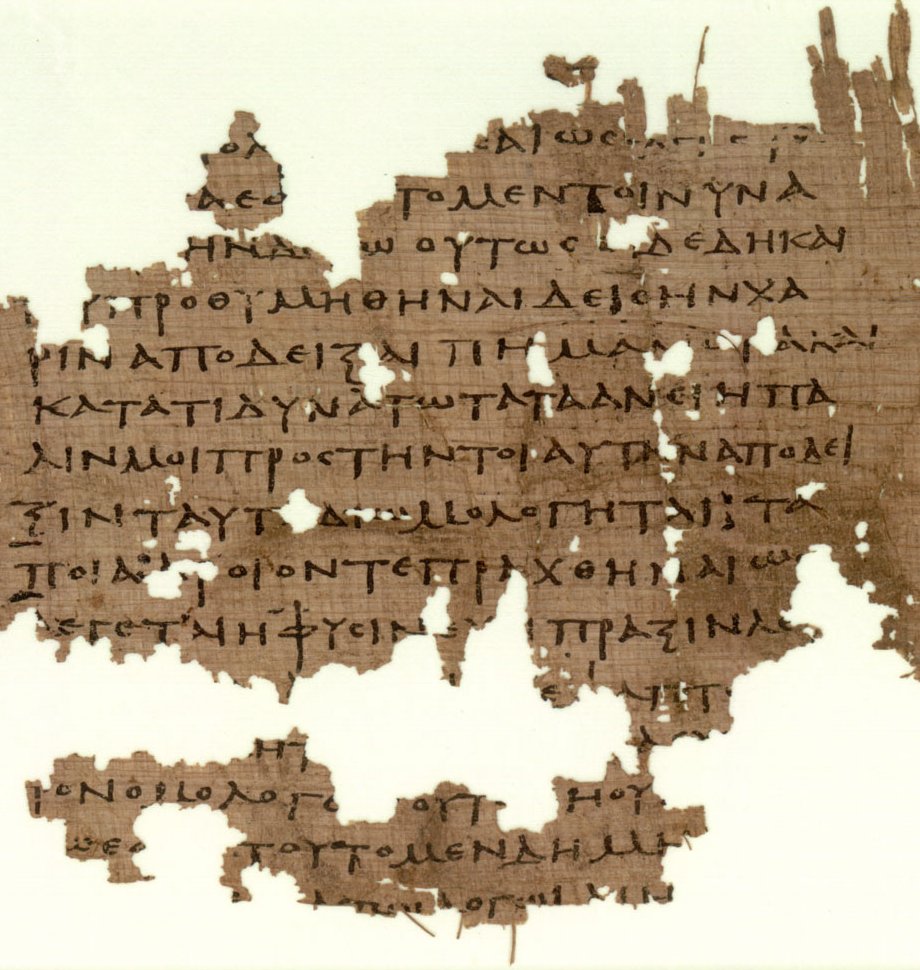
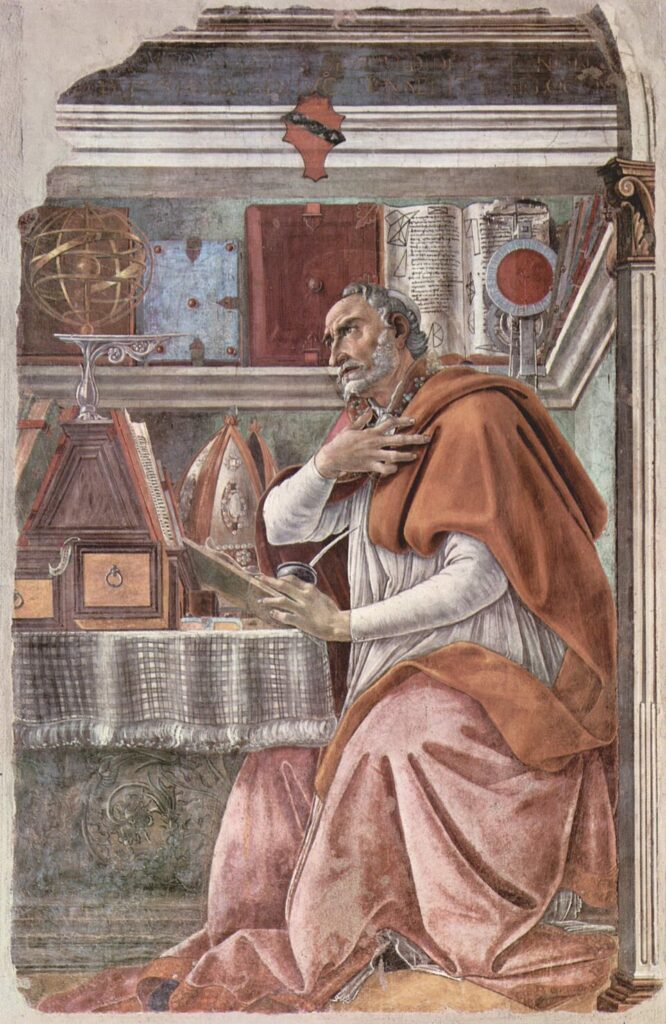
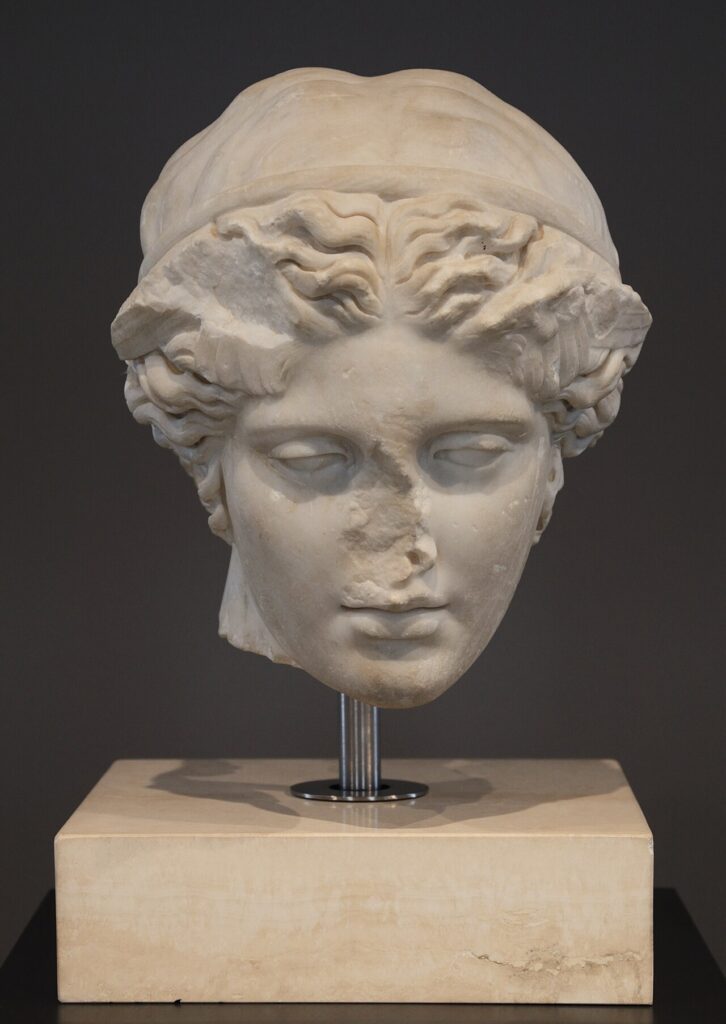
The Whose Who in Heaven
I once had a discussion with my grandparents about when a person goes to heaven, what age are they when they arrive?
It would be cruel for people who die at an older age to have to live eternally with the infirmities of age? Yet it would also be cruel for a child to have to spend eternity as a 7 or 8-year-old? And even if we all get to be automatically upgraded to the age of Jesus when he was crucified, my grandmother’s opinion and a common Christian solution to the problem, is the man who is you at 33 the same man as at 18 or at 80? Can you call the person you are right now the same person you were 5 minutes ago? How about 2 days ago? 2 years ago?
Once again, it seems we are trying to find Theseus’s ship.
The Brother of Death
Though I am still seeking, and will spend the rest of my life seeking new theories, experiences, viewpoints, and perspectives of reality, I think a lot about how we go on. I have had experiences which for me invalidate the paradigm of scientific materialism as it is currently understood, that said I also struggle to correctly orient my ideas around the nature of reality because of the limited-ness of said numinous experiences. I know with the same degree of confidence that the couch I sit on is real, that we go on after the body. It seems at least for a while.
But the question here really is who is it that goes on? Who is it that is here right now? I don’t necessarily buy into the Buddhist idea, as I understand it, that the self is entirely an illusion. Though upon examination, both waking and sleeping, it does seem far more flimsy than we think it is. There does seem to be parts of this self though that pervade both in waking and sleeping life, examine your dreams and you may see like I have that even if you have the head of a bird your moral actions both good and bad in your dreams seem to follow a similar pattern. The fears and desires that pervade our dreams and nightmares seem to flow thematically consistent despite wildly differing scenery and situations.
In defense of Buddhism, as I understand it, this is not entirely inconsistent, as the only part of the self that proceeds from life to life is the Karmic or Moral aspect of ourselves. I can help but imagine it’s more detailed than just our external moral actions that build our durable kernel of self. I think there is an inner moral dimension that might be more akin to what we call when waking our values or our core-personality aspects.
Much Ado about Nothing
All this being said, I have no idea of the true nature of reality, no more idea than before I embarked on this exploration of dreams. But I have found that using my dreams as a tool to closely examine the nature of reality has borne strange but durable fruit; it has opened up a new vista for me for in-depth inquiry of the nature of self, scene, and other. Has helped me more clearly observe what parts of my waking behavior are reactionary to something that happened in the past, and invited me to wonder what parts of me, if any, are shared with that past self?
Embarking on this trip into dreams has been a way for me to come to understand both my ideas around living and dying better, and for such fertile ground for contemplation to remain unexamined by the majority of us for so long seems a shame. So tonight try and observe yourself in the dream realm, and in the morning wake up and wonder about the nature of dreams, those that are nocturnal, and those that are pervasive and last for lifetimes.
A Dream Within a Dream
By Edgar Allan Poe
Take this kiss upon the brow!
And, in parting from you now,
Thus much let me avow —
You are not wrong, who deem
That my days have been a dream;
Yet if hope has flown away
In a night, or in a day,
In a vision, or in none,
Is it therefore the less gone?
All that we see or seem
Is but a dream within a dream.I stand amid the roar
Of a surf-tormented shore,
And I hold within my hand
Grains of the golden sand —
How few! yet how they creep
Through my fingers to the deep,
While I weep — while I weep!
O God! Can I not grasp
Them with a tighter clasp?
O God! can I not save
One from the pitiless wave?
Is all that we see or seem
But a dream within a dream?
Reading Material:
Christian and Western Philosophy:
- Lights On: How Understanding Consciousness Helps Us Understand The Universe – Annaka Harris
- The Republic – Plato
- Reality+: Virtual Worlds and the Problems of Philosophy – David Chalmers
Buddhist and Hindu Philosophy:
- In Love with the World: A Monk’s Journey Through the Bardos of Living and Dying – Yongey Mingyur Rinpoche
- The Life of Milarepa – Tsangnyön Heruka
- The Yoga Sutras of Pantanjali, Satchidananda
Physics and Neuroscience:
- Our Mathematical Universe: My Quest for the Ultimate Nature of Reality – Max Tegmark
- Incognito: The Secret Lives of the Brain, David Eagleman
- Spellbound: Modern Science, Ancient Magic, and the Hidden Potential of the Unconscious Mind – by Daniel Z. Lieberman, MD.
Relevant Fiction:
- Sum: Forty Tales from the Afterlives – David Eagleman
- Invisible Cities – Italo Calvino
- The Aleph and Other Stories – Jorge Luis Borges
- Zen and the Art of Motorcycle Maintenance: An inquiry into values – Robert M. Pirsig